
What is a Snowflake clownfish?
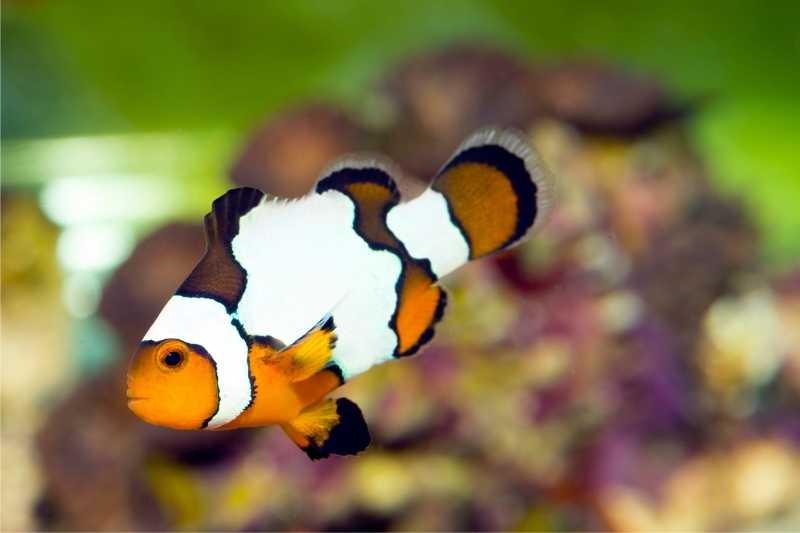
A Snowflake clownfish is a popular designer type of Amphiprion ocellaris with the traditional orange body matched with the namesake irregular white and black markings that loosely resemble a snowflake and differ from the wild type Ocellaris clownfish. No two Snowflake clownfish will have the exact same pattern.
Quick facts
- Scientific Names: Amphiprion ocellaris – Snowflake variant
- Size: 4 inches (10 cm)
- Minimum Tank Size: 10 Gallons
- Reef Safe: Yes
- Care or Experience Level: Beginner – easy to care for
- Preferred Diet: Omnivore, aggressive eater
- Original Part of the World: Aquacultured, first generation were in U.K.
- Color: Orange, white, black
- Price: $30-$100 depending on rarity and store
How big do Snowflake clownfish get?
They grow to about 3-4 inches in total length as adults, with the female in the pair being larger than the male, which is the same for all Amphiprion ocellaris clownfishes.
How much does a Snowflake clownfish cost?
They cost anywhere from $30/each to $99/each at retail, depending on the relative attractiveness and rarity of the white and black markings and the store you purchase from.
Are snowflake clownfish hardy?
They are a hardy fish which makes them popular for aquarists of all skill levels. In practical terms, “hardy” means Snowflake clownfish can tolerate minor fluctuations in water parameters and are generally resistant to many common stressors compared to more delicate marine species. However, their hardiness has limits. Rapid or extreme changes in temperature, salinity, or pH, exposure to toxins (like ammonia or cleaning chemicals), chronic poor nutrition, or overcrowding can still cause serious harm or death. Common beginner mistakes—such as skipping acclimation, neglecting regular water changes, or overstocking—can overwhelm even hardy clownfish. While they are forgiving of minor errors, consistent good husbandry is still essential for their health and longevity.
How long do snowflake Clownfish live?
Clownfish can live for 30 years or more in captivity, but a more common experience and expectation would be 3-7 years. The large gap between maximum and typical lifespan is due to several factors that limit longevity in home aquariums. Chronic exposure to suboptimal water quality, persistent low-level stress, inadequate or imbalanced nutrition, aggression from tankmates, and disease outbreaks are all common causes of early mortality. Even though clownfish are hardy, they are not immune to the cumulative effects of poor conditions. Stable, high-quality water, a varied and appropriate diet, low-stress environments, and proactive health management are key to helping clownfish reach their full lifespan potential. Most losses in home aquariums are preventable with attentive care and good husbandry practices.
What fish can live with a Snowflake clownfish?
Snowflake clownfish are peaceful community reef fish that can live with the majority of other peaceful saltwater fish. The 10 most popular saltwater fish types successfully kept with Ocellaris clownfish, including Snowflakes, are:
- Gobies
- Wrasses
- Tangs
- Blennies
- Dwarf Angelfish
- Dottybacks
- Chromis
- Basslets/Grammas
- Anthias
- Dragonets
Source: Saltwater Aquarium Blog Survey Data
Compatibility is based on factors like similar temperament, size, and feeding behavior. Fish that are peaceful, not overly territorial, and not large enough to see clownfish as prey are generally good choices. However, compatibility is not absolute—individual personalities, tank size, and aquascape layout can influence outcomes. Even among peaceful species, territorial disputes or competition for space can arise, especially in smaller tanks or with similar-shaped fish. Always observe new tankmates closely and be prepared to make adjustments if aggression or stress develops.
There are two great ways to learn more about fish compatibility with these clownfish. You can check out the saltwater fish compatibility chart, or dive deeper into the stocking guides for a specific tank size. Check out the 10 gallon, 20 gallon and 55 gallon stocking guides.
What is the minimum tank size? How many gallons do they need?
The minimum tank size to keep a single or pair of Snowflake clownfish is 10 gallons. Even though they are slow swimmers and generally site-attached, they need 10 gallons of water volume or more.
Water parameters
The ideal water parameters are:
- Salinity: 35 g/L, typically measured as 1.025 specific gravity. Maintaining stable salinity is crucial for osmoregulation; sudden changes can cause stress or shock.
- Temperature: 73-84°F (22-29°C). Clownfish tolerate a range, but rapid fluctuations or extremes can suppress immune function and increase disease risk.
- pH: 8.1-8.4. Stable pH supports metabolic processes; low or unstable pH can cause stress and reduce resistance to disease.
- Ammonia: 0 ppm. Ammonia is highly toxic; even low levels can cause gill damage, lethargy, and death.
- Nitrites: 0 ppm. Nitrite is also toxic and can impair oxygen transport in the blood.
- Nitrates: ~20 ppm or lower. Clownfish can tolerate moderate nitrates, but high levels over time can cause chronic stress and reduce lifespan.
Out-of-range parameters may lead to signs of stress such as rapid breathing, loss of appetite, faded color, or unusual swimming. Ammonia and nitrite are the most critical to monitor closely, as even brief exposure can be fatal. Regular testing and prompt correction of any deviations are essential for long-term clownfish health. Learn more about the most important water parameters here.
How many fish per tank?
It is recommended to stick to a limit of 2 Snowflake clownfish per tank to avoid unnecessary aggression between the pair and non-paired clownfish in the tank. Clownfish naturally form a strict social hierarchy, with a dominant female and a smaller male. Attempting to keep more than two often leads to persistent aggression, bullying, and even death of subordinate individuals. Signs of aggression include chasing, biting, or persistent harassment. If aggression develops, separating the fish or rearranging the aquascape to break up territories may help, but in most cases, keeping only a bonded pair is the safest approach.
Are they reef safe?
All Amphiprion ocellaris varieties are reef safe saltwater fish.
Can a Snowflake clownfish change gender?
A Snowflake clownfish can change gender from male to female one time in their lives. This is called sequential protandrous hermaphroditism. This adaptation makes it easier to form mated pairs in a home aquarium, because the larger, more dominant fish is either already female or will become female after changing gender.
What are the grades of snowflake clownfish?

There are 8 grades of Snowflake available, depending on the source of the clowns:
- Snowflake (orange or black) – ORA, SR
- Premium (orange or black) – ORA, SR
- Ultra – SR
- Black ice (orange) – ORA
- Premium black ice (orange) – ORA
- Fancy (orange) – SA
- Fancy extreme (orange) – SA
- Fancy with bullet holes (orange) – SA
Key: ORA = ORA Farms, SR = Sea and Reef, SA = Sustainable Aquatics
Which breeders sell them?
ORA Farms, Sustainable Aquatics, and Sea and Reef are three popular breeders who sell Snowflake clownfish wholesale to online and brick and mortar stores.
Are Snowflake clownfish aggressive?
Snowflake clownfish are peaceful, non-aggressive saltwater fish. They make great community aquarium tank mates and are compatible with most other saltwater fish species. However, like all clownfish, they may become territorial or display aggression when defending a chosen area, especially during breeding or if the tank is overcrowded. Aggression may manifest as chasing, nipping, or persistent guarding of a territory or anemone. Providing adequate space and hiding places helps minimize these behaviors.
What do snowflake clownfish eat?
Snowflake clownfish are omnivorous and are healthiest when they eat a variety of meaty foods, like mysis, black worms, or brine shrimp, as well as plant-based prepared foods like Seaweed Extreme pellets. Dietary variety is important to ensure they receive all necessary nutrients for vibrant color, growth, and immune health. Signs of poor nutrition include faded coloration, slow growth, lethargy, or increased susceptibility to disease. Juveniles may require more frequent, smaller meals, while adults and breeding pairs benefit from a balanced mix of protein and plant matter. Overfeeding can lead to obesity and water quality issues, so monitor body condition and remove uneaten food promptly. They will generally be some of the more active feeders in the tank and won’t likely shy away from many food offerings.
How often do you feed them?
Feed your clownfish small meals 2-3 times every day. Don’t leave uneaten food in the tank. Make sure food is not being sucked into the filter. It is okay to skip feeding for a day, or a few days, if you are traveling. It’s also okay and fairly typical if you end up feeding them only once per day. I recognize we don’t all have the ability to be home or to set an automatic feeder. No judgement here, just didn’t want to sugar coat what would be best. Once a day is acceptable.
Do they need an anemone?
Snowflake clownfish do not need an anemone to be happy, healthy, and thrive in a saltwater aquarium. In the wild, clownfish and anemones have a mutualistic relationship: the clownfish gain protection from predators among the anemone’s stinging tentacles, while the anemone benefits from food scraps and improved water movement. However, most captive-bred clownfish, including Snowflakes, may not instinctively host anemones, and hosting is not required for their well-being. Anemones, especially wild-caught specimens, are delicate and require stable, mature tanks. Hosting can provide behavioral enrichment for clownfish, but the risks and responsibilities of keeping anemones—including their sensitivity to water quality and lighting—should be carefully considered before adding one to your aquarium.
If you are in the relatively early stages of your saltwater aquarium journey, I strongly recommend you skip anemones. As painful as that might sound.
Which anemones will a snowflake clownfish pair with?
The best anemone to pair with a Snowflake clownfish is the Bubble Tip Anemone, particularly one that has grown and divided in an aquarium or aquaculture setting.

They may also pair with the Magnificent Sea Anemone, and the three types of carpet anemone: Giant, Haddon’s, and Merten’s (Wilkerson). Please keep in mind that while the anemones listed here are the species that host Ocellaris clowns in the wild, pairing clowns with anemones in the aquarium setting is far from a guarantee. Many times clownfish will seem to ignore the anemone altogether.
Parasites and disease
Snowflake clownfish are susceptible to Marine Velvet and Saltwater Ich, as well as other common marine diseases. Even hardy clownfish can become vulnerable when stressed or exposed to poor water quality. Early warning signs of disease include rapid breathing, scratching against objects, faded color, or visible spots or lesions. Introducing unquarantined fish is a common way pathogens enter the aquarium, leading to outbreaks that can affect all tank inhabitants. It is strongly recommended that you quarantine all new fish and treat for any parasites before introducing them into your display tank. Careful observation and prompt action at the first sign of illness can prevent losses and keep your aquarium healthy.
Other great articles
Check out these other great clownfish articles:
- 19 Best clownfish types
- Ocellaris
- Breeding and clownfish eggs
- Picasso
- Maroon
- Tomato
- Clownfish and anemone pairings
References
Wilkerson, Joyce D. Clownfishes. T.F.H. Publications, Inc. 2001.